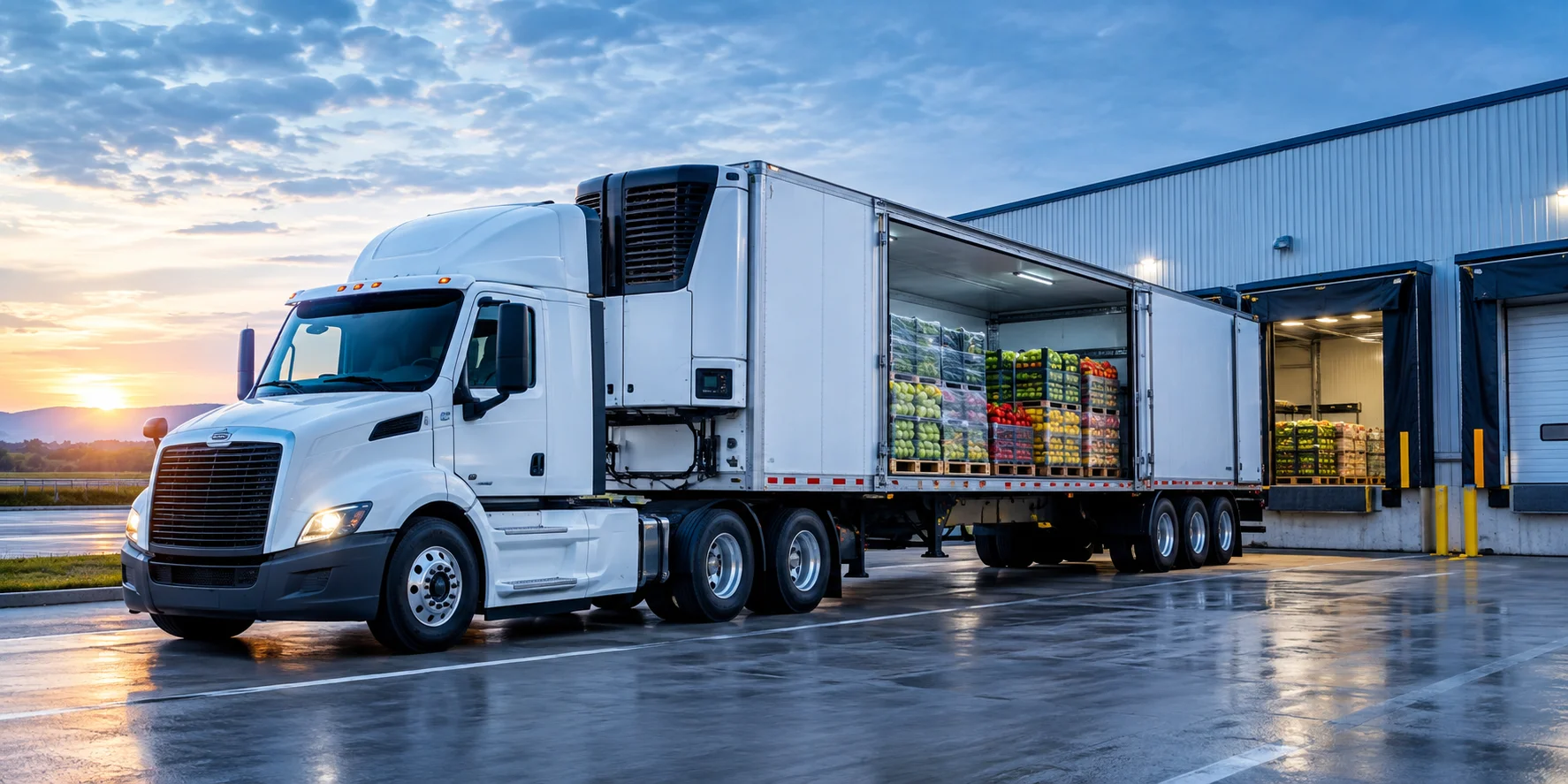
Temperature-sensitive freight requires more than simply placing products inside a refrigerated trailer. From loading and pulldown to transit monitoring and final delivery, every stage of the journey can affect product quality, shelf life, and ultimately your bottom line.
For shippers moving fresh produce, frozen foods, pharmaceuticals, dairy products, or other temperature-sensitive goods, maintaining a consistent cold chain is essential.
Why Cold Chain Integrity Matters
A cold chain is a temperature-controlled supply network designed to keep products within a specific temperature range throughout transportation and handling.
Even a short period outside the required temperature range can affect certain products. Produce may lose freshness, dairy products can deteriorate, and frozen cargo can partially thaw and refreeze.
The goal is not simply to keep a trailer “cold.” The goal is to maintain the correct temperature consistently from pickup to delivery.
1. Know Your Product’s Temperature Requirements
Before transportation begins, shippers should clearly understand the temperature requirements of their cargo.
Different products require different conditions. Fresh produce, frozen foods, dairy products, and pharmaceuticals may each have specific temperature ranges that need to be maintained.
Shippers should provide carriers with clear instructions covering:
- Required transportation temperature
- Acceptable temperature range
- Loading requirements
- Maximum allowable exposure time
- Special handling instructions
- Delivery requirements
Clear specifications help carriers select the appropriate equipment and operating settings.
2. Understand Pulldown Temperature
Pulldown is the process of reducing the temperature inside a refrigerated trailer to the required operating level.
A common mistake is assuming that the reefer unit can quickly cool warm cargo after loading. In many situations, the trailer should already be at the appropriate temperature before the cargo is loaded.
Pre-cooling the trailer helps establish the required environment before loading begins.
However, pre-cooling the trailer does not replace proper product preparation. Cargo should generally be loaded at the appropriate temperature for its specific transportation requirements.
3. Choose the Right Reefer Equipment
Modern refrigerated trailers are designed to maintain controlled temperatures during transportation, but equipment selection still matters.
Factors to consider include:
- Cargo type
- Required temperature range
- Shipment volume
- Transit distance
- Expected weather conditions
- Loading configuration
- Delivery schedule
For long-haul shipments, reliable reefer equipment and proper maintenance are particularly important because equipment problems can have significant consequences over extended transit times.
4. Load Cargo for Proper Airflow
Correct loading is just as important as the refrigeration unit itself.
Cargo should be positioned to allow refrigerated air to circulate throughout the trailer. Blocking air channels or loading products too tightly can create temperature variations inside the trailer.
Shippers and loading teams should pay attention to:
- Airflow around the cargo
- Trailer loading patterns
- Pallet placement
- Door clearance
- Product spacing
- Weight distribution
A well-maintained reefer cannot compensate for poor loading practices.
5. Monitor Temperature Throughout Transit
Temperature monitoring provides visibility into what is happening inside the trailer while cargo is moving.
Depending on the shipment, monitoring may include:
- Reefer unit temperature
- Return-air temperature
- Supply-air temperature
- Data logger readings
- GPS and telematics information
- Temperature alerts
Continuous monitoring can help identify potential issues earlier, giving logistics teams an opportunity to investigate and respond before cargo quality is compromised.
6. Plan for Long-Haul Conditions
Long-distance transportation introduces additional variables.
Weather, traffic delays, border crossings, loading delays, delivery appointments, and unexpected stops can all affect a shipment.
A strong cold-chain plan should therefore include contingency planning. Shippers should know how temperature-sensitive cargo will be handled if delays occur or refrigeration equipment requires attention.
7. Inspect Equipment Before Loading
Before loading temperature-sensitive freight, the trailer should be checked for basic operational and cleanliness requirements.
Important checks can include:
- Reefer operation
- Temperature settings
- Door seals
- Interior cleanliness
- Drainage
- Trailer condition
- Fuel or power availability
- Temperature-monitoring equipment
Small issues identified before departure are generally easier to address than problems discovered hundreds of miles into a shipment.
Conclusion
Protecting temperature-sensitive freight requires coordination between the shipper, carrier, equipment, and receiving team.
The most important principles are straightforward: understand the product’s requirements, pre-condition the equipment properly, maintain airflow, monitor temperatures, and prepare for unexpected delays.
When every part of the cold chain is managed carefully, shippers can reduce the risk of spoilage, protect product quality, and improve the reliability of long-haul transportation.
Key Takeaway: Successful cold-chain transportation depends on maintaining the right conditions consistently, not simply keeping a reefer trailer running.


Leave a Reply