
Selecting the right trailer is one of the simplest ways to control transportation costs. For many shipments, a standard dry van provides everything that is needed. For temperature-sensitive cargo, however, refrigerated equipment may be essential.
Choosing between a dry van and a reefer should therefore be based on the requirements of the cargo rather than simply selecting the cheapest available option.
What Is a Dry Van?
A dry van is an enclosed trailer designed to protect freight from weather, road debris, and other external conditions.
Dry vans do not actively control the temperature inside the trailer. They are commonly used for products that do not require refrigerated or frozen transportation.
Typical dry van freight includes:
- Packaged consumer goods
- Furniture
- Electronics
- Clothing
- Non-perishable food
- General merchandise
- Industrial products
For suitable cargo, dry vans can provide a straightforward and cost-effective transportation solution.
What Is a Reefer?
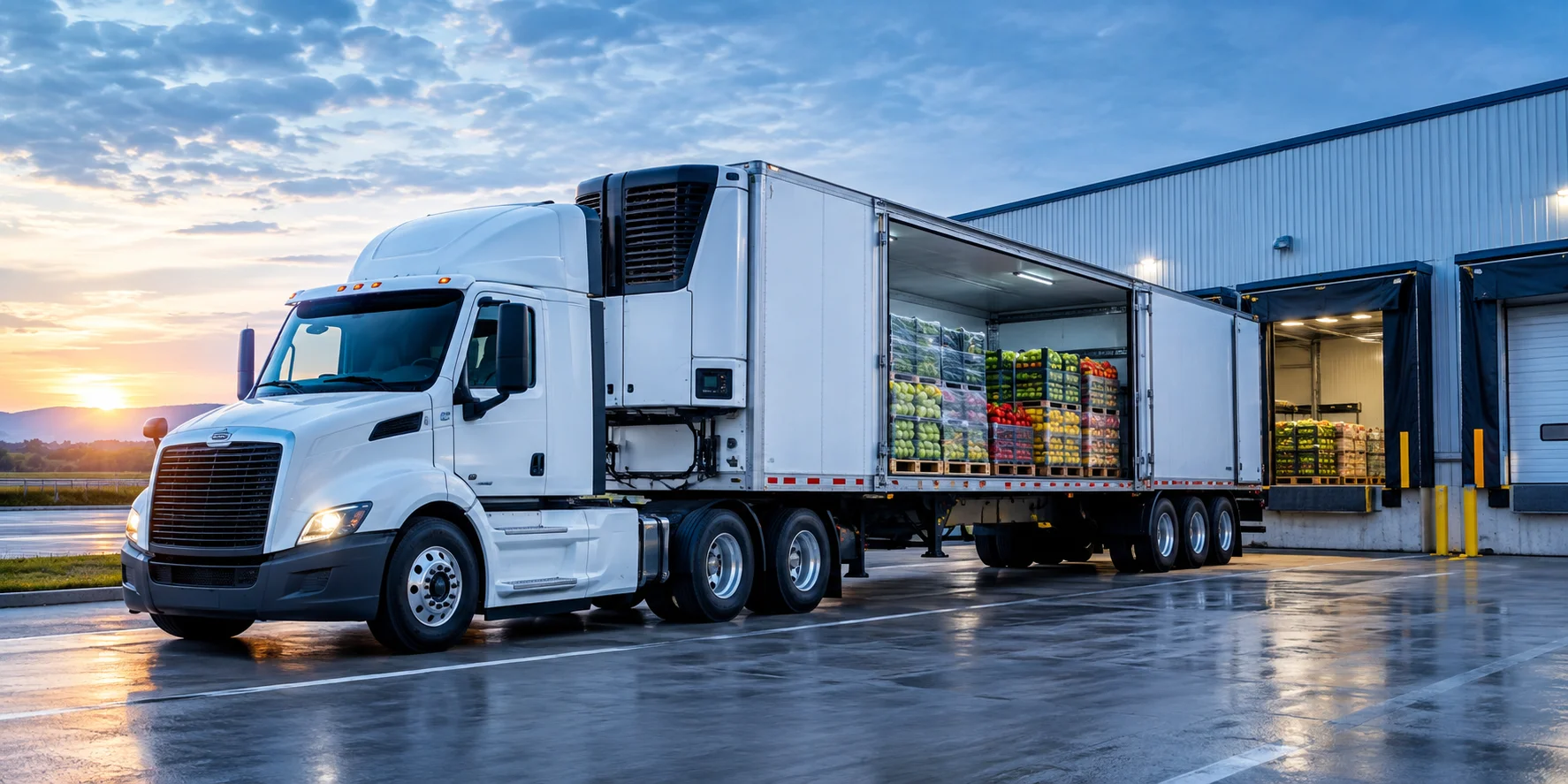
A reefer, short for refrigerated trailer, is equipped with a refrigeration system that helps maintain a controlled temperature during transportation.
Reefers are commonly used for:
- Fresh produce
- Frozen foods
- Dairy products
- Meat and seafood
- Pharmaceuticals
- Certain chemicals
- Other temperature-sensitive products
Unlike a dry van, a reefer can actively manage the temperature environment inside the trailer.
When Should You Choose a Dry Van?
A dry van may be the appropriate choice when the product can safely travel at normal ambient conditions and does not require active temperature control.
For example, shipping packaged clothing across a long-haul route generally does not require refrigeration. Using a reefer in such a situation could add unnecessary transportation expense without providing a meaningful benefit.
Before choosing a dry van, however, shippers should consider whether the cargo has any temperature, humidity, or environmental requirements.
When Is a Reefer Necessary?
A reefer becomes important when maintaining a controlled temperature is part of protecting the cargo.
For example, fresh produce may require specific temperature conditions to preserve quality and shelf life. Frozen products may require temperatures low enough to prevent thawing.
In these cases, selecting a dry van simply because it costs less can create a much greater risk.
Cargo damage, rejected shipments, reduced shelf life, and product loss can cost significantly more than the difference in transportation rates.
Comparing the Total Cost
The cheapest freight rate is not always the lowest overall logistics cost.
Shippers should consider the complete cost of transportation, including:
Transportation Rate + Equipment Requirements + Cargo Risk + Potential Losses
A dry van may have a lower transportation cost, but if the cargo requires temperature control, the potential cost of spoilage can outweigh those savings.
Conversely, using a reefer for cargo that does not require temperature control may add unnecessary expense.
The objective is to select the equipment that provides the required protection without paying for capabilities the shipment does not need.
Dry Van vs. Reefer: Key Differences
| Factor | Dry Van | Reefer |
|---|---|---|
| Temperature Control | No active control | Active temperature control |
| Typical Cargo | General freight | Temperature-sensitive freight |
| Refrigeration Required | No | Yes |
| Cost Consideration | Generally lower | Generally higher |
| Common Uses | Retail, industrial, packaged goods | Produce, frozen foods, dairy, pharmaceuticals |
| Temperature Monitoring | Usually less critical | Often essential |
Consider the Route and Weather
The transportation environment can also influence equipment selection.
Long-haul routes may pass through regions with significantly different temperatures. A shipment traveling during extreme summer or winter conditions may face greater exposure to temperature fluctuations.
Shippers should consider:
- Route length
- Seasonal weather
- Expected transit time
- Number of stops
- Loading and unloading conditions
- Product sensitivity
- Delivery requirements
These factors can help determine whether active temperature control is necessary.
Avoid Paying for Equipment You Don’t Need
Using a reefer for every shipment is not automatically better.
If the cargo is stable at ambient temperatures, a dry van may provide adequate protection while keeping transportation costs under control.
The goal is to match the equipment to the cargo.
A well-planned transportation strategy avoids both extremes: using inadequate equipment for sensitive freight and paying for unnecessary refrigeration on standard cargo.
Conclusion
Choosing between a dry van and a reefer comes down to understanding the cargo and its transportation requirements.
Dry vans are suitable for a wide range of general freight, while reefers provide the temperature control required by many perishable and sensitive products.
The right decision should consider not only the initial freight rate but also product value, temperature requirements, route conditions, and the potential cost of cargo loss.
Key Takeaway: Smart equipment selection balances transportation cost with cargo protection. The right trailer is the one that provides the necessary protection without unnecessary expense.


Leave a Reply